
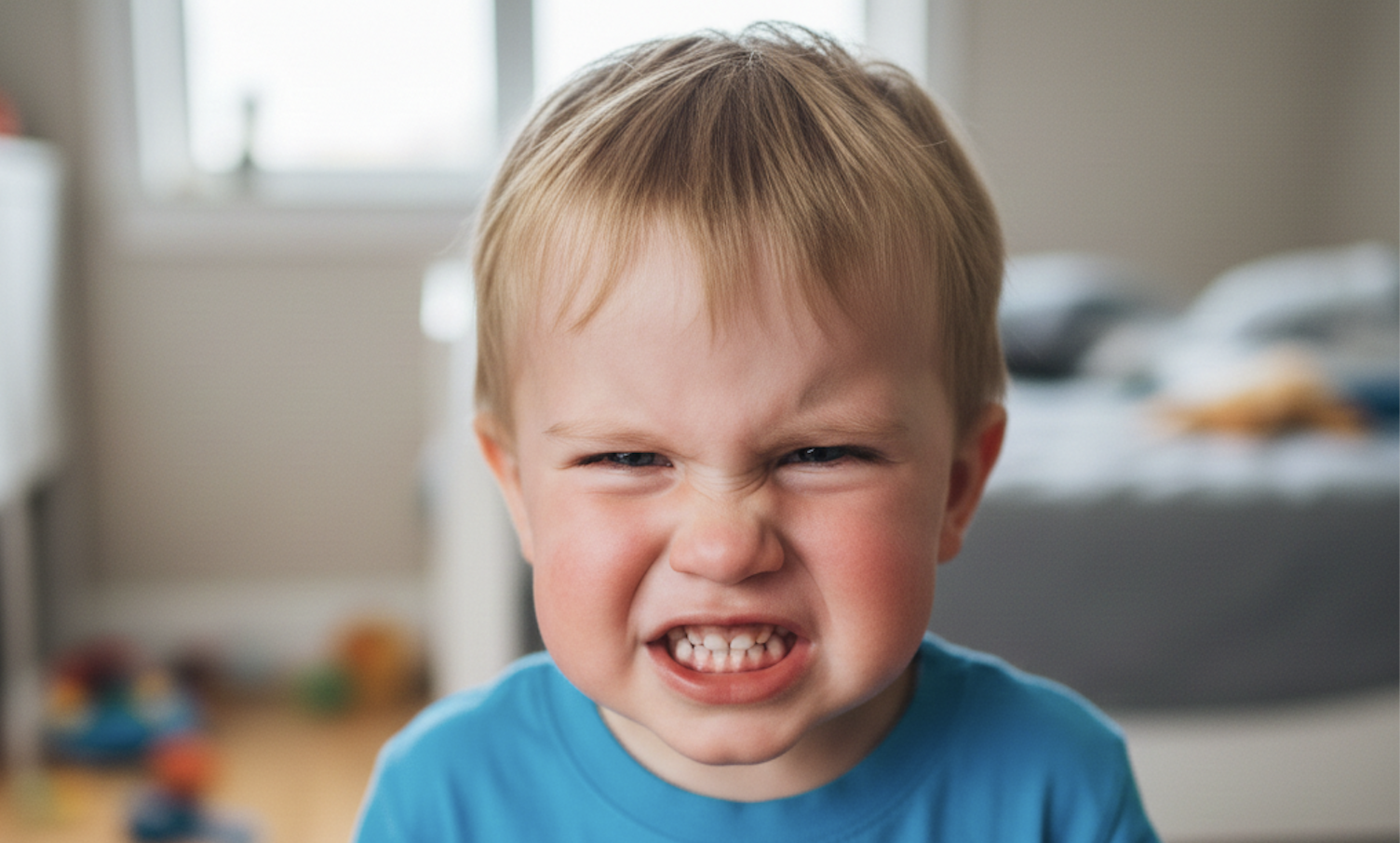
Teeth grinding is a common habit noted in children. It can happen when awake or asleep. Parents can hear the grinding sounds while their child is sleeping. Most kids don’t have any pain or concerns from grinding alone.
What is teeth grinding (aka bruxism)?
Teeth grinding (aka bruxism) is an involuntary and repetitive jaw muscle activity characterized by clenching or grinding. Parents often report hearing a “clacking” sound at night from their child’s bedroom. Most kids don’t have any changes in quality of life from teeth grinding alone.
Teeth grinding can occur 2 different ways: 1) during awake or 2) during sleep.

I hear my child grinding their teeth at night. Is this normal?
Yes! Teeth grinding is very common in children. Some studies say it occurs in 13-49% of children, but more research is needed.
What causes teeth grinding?
The research is quite poor on pediatric teeth grinding. However, there are some theories below.
The causes can differ depending on whether grinding occurs during sleep or while awake! Children generally grind their teeth while sleeping whereas awake teeth grinding is more seen in teens and adults.
Sleep teeth grinding is mainly due to small episodes of disturbed sleep (micro-arousal). Sleep can be disturbed due to breathing disorders, stress, or poor sleep hygiene. The disturbances lead to a stress response from the body which manifests as jaw clenching/teeth grinding.
Below are some factors that cause micro-arousals:
- Sleep disturbances: snoring, sleep apnea, restlessness, nightmares, agitation, and drooling.
- Emotional distress: bullying, traumatic incidents, parental separation can raise emotional tension
- Behavioral factors: aggressive behavior, attention/behavioral disorders, and oral habits (nail biting).
- Breathing conditions: asthma, impaired nasal breathing, allergies, secondhand smoke and large adenoids or tonsils.
Awake teeth grinding is caused by emotional distress, social anxiety, social pressures. It can be also seen in those with medical conditions such as cerebral palsy and down syndrome.
Parents ask if crooked teeth or crowding causes teeth grinding. The current evidence does not support this. Kids with perfect bites may grind their teeth just as much as kids that need braces.
What are the symptoms of my child’s teeth grinding?
Symptoms vary based on the duration and force of the grinding.
- tooth wear
- fractured dental fillings
- indentations in tongue or cheeks
- headaches
- jaw muscle pain
- TMJ joint pain/disorder
How do you diagnosis teeth grinding?
Diagnosis in children is usually based on parent reporting and clinical examination. Parents will usually hear teeth grinding noises while their child is sleeping.

There are more advanced tools to diagnose sleep teeth grinding such as polysomnography or electromyography. These tools measure sleep patterns and muscle activity. These tests are impractical in children due to intolerance of the monitors at nighttime, cost, and lack of access.
How do you treat teeth grinding in children?
There are no treatments that are recommended for teeth grinding in children. Generally, you let the child grow out of this habit. Teeth grinding is a strong recommendation for crowns as your child may break their fillings.
Nightguards work well in adults. However, they can restrict growth in children and many kids cannot tolerate them in their mouths overnight.
There are some medications that have been studied. They can help reduce grinding but there are risks for over-sedation or other complications thus are not recommended.
If your child has dental fractures, pains, jaw pain or headaches, then you should see a dentist or physician.
Will my child grind their teeth when they are older too?
Possibly but its not that straight forward. Adulthood teeth grinding has other causes. These include caffeine, alcohol, technology use, anxiety/stress, and sleep habits.
Some believe teeth grinding in childhood can increase your risk of teeth grinding in adulthood but its not a proven trend in the literature.
Treatment options are available in adulthood such as night guard, medications or Botox.
Can I do anything to reduce my child’s reduce risk of grinding?
There is no cure for child teeth grinding. However, studies show children generally don’t have a diminished quality of life from teeth grinding alone. Research is poor in this area and the recommendations below need to be studied further.
- Sleep Hygiene (disturbed sleep is #1 contributor to nighttime grinding)
- minimize screen/technology use before bedtime
- reduce noise and light exposure at bedtime
- regular bed time every night
- keep pets out of bed
- maintain pre-bedtime routines
- avoid computers, TV, video games in bed (keep the bed for sleeping only)
- Emotional management
- promote healthy relationships
- cognitive behavioral therapy
- Breathing issues
- asthma/allergies: reduce irritants, pursue medical management
- possible tonsil and adenoid removal
- remove any irritants like smoke exposure or pet allergens etc
Check out this information guide by the Children’s Hospital of Eastern Ontario (CHEO) for more details on how to improve your child’s sleep hygiene.
The final word…
Teeth grinding is very common in children. Mostly this occurs at night whereas awake grinding is common in teens and adults. Most kids grow out of it and don’t have any issues from teeth grinding. Parents can focus on improving sleep hygiene and seeing a physician for any breathing disorders. A dental consult is recommended if your child has any symptoms or discomfort.
References:
Amaral, Cristine & Sobral, Jennifer & Alves, Flávia & Pereira, Claudia & Alves, Flávio. (2024). Bruxism in Childhood: A Scoping Review. Journal of the California Dental Association. 52. 10.1080/19424396.2024.2313775.
Antonio AG, Pierro VS, Maia LC. Bruxism in children: a warning sign for psychological problems. J Can Dent Assoc. 2006 Mar;72(2):155-60. PMID: 16545178.
Carrillo, Fatima & Cepeda, Maria & Longoria, Jorge & Won, Kim & Tovar, Jaime & Gil, Luis & Peralta, Silvia & Rodriguez, Karol & Solis Soto, Juan. (2026). Pediatric bruxism: A comprehensive review of clinical manifestations, diagnosis, and integrated management. International Journal of Applied Dental Sciences. 12. 27-31. 10.22271/oral.2026.v12.i1a.2321.
Childrens Hospital of Eastern Ontario. (n.d.). Sleep for children and youth. CHEO. https://www.cheo.on.ca/en/resources-and-support/p5643.aspx
Huynh N, Fabbro CD. Sleep bruxism in children and adolescents-A scoping review. J Oral Rehabil. 2024 Jan;51(1):103-109. doi: 10.1111/joor.13603. Epub 2023 Sep 24. PMID: 37743603.
Leung AKC, Wong AHC, Lam JM, Hon KL. Sleep Bruxism in Children: A Narrative Review. Curr Pediatr Rev. 2024;21(1):40-50. doi: 10.2174/1573396320666230915103716. PMID: 37724678.
Minervini G, Franco R, Marrapodi MM, Crimi S, Fiorillo L, Cervino G, Bianchi A, Cicciù M. Sleep bruxism in children main methods of treatment: a systematic review with meta-analysis. J Clin Pediatr Dent. 2024 Sep;48(5):41-50. doi: 10.22514/jocpd.2024.102. Epub 2024 Sep 3. PMID: 39275819.
Senff J, Bonotto DV, Hilgenberg-Sydney PB, Sebastiani A, Scariot R, Oda LY. Childhood and Adolescents Sleep Bruxism Treatment: A Systematic Review. Sleep Sci. 2023 Sep 11;16(3):e344-e353. doi: 10.1055/s-0043-1772826. PMID: 38196770; PMCID: PMC10773508.
Storari M, Serri M, Aprile M, Denotti G, Viscuso D. Bruxism in children: What do we know? Narrative Review of the current evidence. Eur J Paediatr Dent. 2023 Sep 1;24(3):207-210. doi: 10.23804/ejpd.2023.24.03.02. PMID: 37668461.
Leave a Reply